Teaching and Learning for Intercultural Understanding Newsletter January 2021
Reimagining Our World
 31 December 2020: New Year’s Eve in Times Square was very different this year. The usual crowds and their revelry were replaced by a small crowd of invited frontline workers representing, and rightly honouring, all of those who have taken care of others during this pandemic. Just before the ball dropped, American singer and songwriter, Andra Day, carried on the tradition of covering John Lennon’s Imagine with her beautiful rendition. This song, written 50 years ago in 1971, resonates particularly strongly today in 2021, when I believe we are beginning to imagine a better world, and reimagine our world and our part in creating it.
Much has been written about what we have learned this past year through the Covid-19 pandemic, racial injustice and inequality, and the BLM movement that resonated in countries round the world. And much has been written about our enormous capacity for empathy, compassion and love. Across the globe we saw examples of people of all ages reaching out in kindness and taking care of one another. Make the World Better is a stunning collaborative student-led project created in the spring of 2020 to bring joy, comfort and express gratitude during this crisis. Our need for human relationships, connection and community was, and is, clear.
The Guardian columnist, Jonathan Freeland, described this well when he wrote, ‘The pandemic took away so many lives, but it also reminded us what life is for: the simple joy of being with other people, close enough to touch and be touched. Like a magnifying glass placed over each one of us, the virus revealed what is our greatest weakness but also our most precious strength: our need for each other.’
Human relationships are central to education and to creating an inclusive learning community. Knowing ourselves and each other is essential for forming strong, nurturing and positive relationships. It requires self-reflection, self-awareness and self-knowledge, the willingness to share who we are with others and a genuine interest in learning about others as well.
We learned that all of us, children and adults of all ages, can have a positive impact and make things better NOW. This knowledge and the action it inspires will continue to be part of reimagining our world and education. We do need one another and together we can reimagine our world where we come to know one another, to honour and respect one another and to lift one another up. We can learn to love and care for one another, and with common purpose and vision, create an inclusive world in which we can all live equitably, safely, peacefully and joyfully. I invite you to read the blog I wrote in June 2020, The Yearning We Are Feeling Is for Love.
There is a renewed commitment to anti-bias and anti-racist education, and to promoting diversity, equity, inclusion and social justice in our learning communities Intentionally teaching about human relationships, and the ability to live and work together with understanding, compassion and positive regard is central to this commitment. Sharing our identities, cultures, personal histories and stories is part of this work. Read more about embracing equity, diversity and inclusion in my blog, Solstice 2020: A time of stillness and reflection.
In his excellent article, Teaching Kindness Isn’t Enough, Bret Turner instructs us to go beyond kindness and create a culture of justice. He says, ‘Moving away from simple kindness and toward real justice begins with building an identity-safe classroom: a place where everyone’s story is not only recognized but honored, studied and loved.’ We are reminded that kindness needs to be paired with positive action.
The inspiring children’s book, What Does It Mean To Be Kind? by Rana Di Orio, is an excellent resource to spark initiatives amongst your students for spreading kindness in our world, including celebrating our differences.
First Book has published an excellent guidebook on race and racism for educators, which I highly recommend as you engage in ABAR education.
This is a hugely pivotal and transformational time in our world and in education. There is work to be done and it is ours to do, students and adults working alongside one another. It is exciting work. It is challenging work. It is vital work. And it is hopeful work.
Andra Day’s powerful song, Rise Up, inspires the hope needed to engage in this work together. May 2021 be a better, brighter and hopeful year ahead as we reimagine our world together.
Inclusion and Connection
 ‘Diversity is about all of us, and about us having to figure out how to walk through this world together.’ Jacqueline Woodson, Author
A diverse community is not necessarily an inclusive one. Intercultural understanding is the bridge between diversity and inclusion. Inclusive learning communities are developed intentionally when all members, students and adults, work together to ensure that everyone is valued, and feels a deep sense of belonging.
Intercultural understanding is a disposition and competence that enables us to engage with all forms of difference and diversity with appreciation and respect, establish inclusive relationships, and work to create inclusive learning communities. We continue to develop intercultural understanding throughout our lives, and as we move through our lives we come to understand it more deeply and live it more fully.
As a disposition it is a mindset or orientation and includes beliefs, values and attitudes; as a competence it includes knowledge, understanding and skills. Together they provide a way of being in the world that enables us to approach and engage with difference in mutually respectful and affirming ways.
In my book, Teaching and Learning for Intercultural Understanding: Engaging Young Hearts and Minds, I present a Framework for Developing Intercultural Understanding (Rader, 2016), which contains these four components:
KNOWLEDGE AND UNDERSTANDING of topics including culture, language, identity, beliefs and global issues
TRANSFORMATIVE BELIEFS, VALUES AND ATTITUDES including appreciation and respect for diversity, compassion, empathy, curiosity, human rights, social justice and equity
ESSENTIAL INTERCULTURAL, INTERPERSONAL AND LIFE SKILLS including intercultural awareness and sensitivity, communication, adaptability, collaboration, creative and critical thinking, resilience, and the ability to recognise, challenge and resist stereotypes, prejudice, discrimination and racism
ENGAGEMENT IN POSTIVE ACTION that puts into practice what we are learning, aligns our beliefs and values with the ways we live our lives, and makes a positive contribution to our world
These components of the Framework need to be intentionally taught, modelled and practised, and embedded in the curriculum and life of the school. I provide detailed lesson plans based on compelling children’s literature, that integrate the Framework into your practice.
I invite you to bridge diversity and inclusion in your learning community. Come join my colleagues and me at one of two workshops on Teaching and Learning for Intercultural Understanding in February and April 2021. See the Events listed in this newsletter or on my website www.debrarader.com.
Featured Resources
 Hope as Possibility…
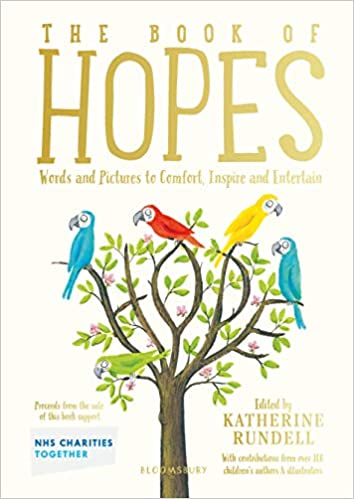
The Book of Hopes: Words and Pictures to Comfort, Inspire and Entertain
Edited by Katherine Rundell
For author Katherine Rundell hope is about possibility and she calls herself a possibilityist! During the pandemic in 2020, Katherine was in need of hope and turned to her great love, books, which brought her strength and courage. She began a Hope Project to help others feel like a possibilityist, too. Katherine asked some of her favourite children’s writer’s and artists to write or draw something short to make people reading them ’laugh, or wonder, or snort, or smile.’
She received an enthusiastic response and this delightful collection was put online to read for free at the National Literacy Trust. It received a fabulous reception and many schools made their own Books of Hope. The hardback book now raises money for NHS Charities Together.
This wonderful anthology of short stories, poems and drawings could be used to inspire hope, empathy and wellbeing in children (and adults!) and spark their own writing and artwork to ‘comfort, inspire and entertain’ others, during this pandemic and as we look to the future. It would be a welcome addition to any school, class or home library!
 Just imagine…
Imagine by John Lennon
Illustrated by Jean Jullien
‘Imagine is a statement of great power, written with the utmost love for humanity and its future.’
‘Imagine è una dichiarazione di grande potenza, scritta con profondissimo amore per l’umanità e per il suo futuro.’
Yoko Ono Lennon, multimedia artist, singer, songwriter and peace activist
I have always loved the song, Imagine, and was delighted to come across this beautifully illustrated children’s book in a bookshop in Puglia, Italy. It is based on John Lennon’s timeless lyrics, and so relevant today. In these pages we ‘join a small pigeon on its journey to bring a message of peace and friendship to all of the birds of the world, of every aspect and every color.’
The text inspires rich discussion, particularly in light of the current pandemic and its impact. Its bilingual Italian and English text lends itself to translations in the languages of the students and adults in your learning community. It can be used to spark children’s original writing and artwork as they imagine a better world. Imagine the possibilities…This book is available in Spanish, French and Catalan as well.
Events
 Exciting and vital professional development for you and your school!
Teaching and Learning for Intercultural Understanding
One-day Workshop in Partnership with ECIS
Thursday 11 February 2021 9.00-17.00 (GMT)
Come learn with us online!
Join Kam Chohan, Sarah Kupke and me in an exciting partnership with The Educational Collaborative for International Schools (ECIS) for a one-day workshop on Teaching and Learning for Intercultural Understanding. Collaborate with fellow educators as we explore ways to further develop intercultural understanding and promote diversity, equity and inclusion in our learning communities. Using my Framework for Developing Intercultural Understanding (Rader, 2016) and drawing on compelling children’s literature we will explore and develop new strategies, activities and resources that make our diverse learning communities inclusive and equitable ones.
 A deeper dive into intercultural understanding!
Teaching and Learning for Intercultural Understanding
Spring Institute 15-17 April 2021
Thu 15 April 16.00-17.30
Fri 16 April and Sat 17 April 10.00-18.00 (CEST)
Come learn with us online!
Join Sarah Kupke, Heidi Bachman and me in April 2021 for a more in-depth two-day Institute to further integrate teaching and learning for intercultural understanding into your teaching practice and the life of your school. Using my Framework for Developing Intercultural Understanding (Rader, 2016) and drawing on compelling children’s literature we will explore and develop new strategies, activities and resources that make our diverse learning communities inclusive and equitable ones. You will actively engage in personal and collaborative learning and reflection through a range of activities, both synchronous and asynchronous.
COMMENTS

REGISTER FOR FREE FOR MY RESOURCES, BLOG AND NEWSLETTER
BLOG

Teaching and Learning for Love and Compassion
Newsletter Issue 8 September 2022
Teaching and Learning for Love and Compassion enhances our wellbeing and supports our Diversity, Equity, Inclusion and Justice (DEIJ) work in our learning communities. Learn more about this compelling and essential practice.

Reimagining Education
Newsletter 2021 Issue 7
We are reimagining education where relationships are centered and children and adults work together to create inclusive and equitable learning communities.


Reimagining Our World
Newsletter 2021 Issue 6
We are reimagining our world where human relationships, connection and community are valued and nurtured, and our part in creating it.

Solstice 2020: A time of stillness and reflection
The solstice has given us a pause to reflect on the year gone by. This particular year of Covid-19 we have rediscovered the importance of human relationships, which are at the heart of equity, diversity and inclusion.


The Yearning We Are Feeling Is For Love
Covid-19 has given us pause to consider what is most important in life and we have rediscovered our human need for connection and community, love and compassion, and belonging.

Sharing Caring and Gratitude Round the World
Bermuda’s ‘shelter in place’ restrictions were not far behind the lockdown in Italy. During a conversation back in March with my friend and colleague, Sharon Brown, Design teacher at Somersfield Academy in Bermuda, the idea for a graphic design project entitled Expression of Thanks and Hope was inspired and conceived.

Messages of Gratitude and Hope
As I listened to the many conversations during the The Inquiry Educators Summit (TIES) online 16-17 May 2020 the word collaboration was mentioned often.

Serendipity Wasn’t On My Shopping List
Every now and then we experience a bit of magic in life! It can happen anytime and anywhere, even during a global pandemic at a metre’s distance in front of a shopping trolley during lockdown.

Caring, Compassion and Covid-19
As we face this global health crisis people around the world are joining together to support one another with caring and compassion.

Intercultural Understanding: Compelling pedagogy for meeting the 2030 SDGs
Newsletter 2020 Issue 4

THE POWER OF RITUAL
Click, click, click, the flame bursts to life, the kettle is on, my favourite mug on which is written ‘Non basta una vita. One life is not enough’ sits waiting to receive its English Breakfast teabag.

OUR INSTITUTE AT THE INTERNATIONAL SCHOOL OF STUTTGART e.V.
Intercultural understanding is the bridge between diversity and inclusion, and is critical as we strive to create inclusive school communities.


Making Intercultural Learning and Understanding Visible
Opportunities for intercultural learning and understanding are all around us!

Book Review – Teaching and Learning for Intercultural Understanding: Engaging Young Hearts and Minds
Book Review by Gustavo M Lanata

Five things you need to know about intercultural understanding
It is an exciting time to be an educator.

Celebrating Our Diversity: Sharing Our Identities and Telling Our Stories
Newsletter 2019 Issue 2

A New Year… and a new look at developing intercultural understanding
Newsletter 2019 Issue 1

Celebrations and Traditions: Connecting with Others and Creating Community
What a splendid time of year!