Teaching and Learning for Intercultural Understanding Issue 3, September 2019
Embedding Intercultural Understanding in Our Schools
 We are learning all the time and everywhere, and opportunities for intercultural learning and understanding are all around us! We can help make intercultural learning and understanding visible when we intentionally provide opportunities for children to reflect on and share their intercultural experiences.
We can develop intercultural understanding best when we intentionally embed it the life of our classroom and school. In my last blog I shared the following learning activity.
When I taught Grade 3 I wanted to help make learning visible and learning strategies evident for my students. I began the school year with an activity that beautifully set the stage for enhanced learning and collaboration in the coming year, and we looked back on it often. It helped the children know each other more and discover commonalities as we began to develop a sense of community. It also highlighted and encouraged intercultural learning and understanding, and I would like to share it with you.
The first week of school I asked the children to bring in an item that reflected something new they had learned that summer. I explained that it could be an artifact, book, photograph, audio or video clip etc. I asked them to share with the class what they had learned and how they had learned it. I shared my own learning as well.
One child brought in a stick and a plate as he had learned plate spinning at a circus camp, which he happily demonstrated for us! Another brought a guidebook of Spain as she had visited there and loved learning about flamenco dance. A third child brought in a photograph of himself learning to waterski and another brought a French-English phrasebook as she was learning French after meeting French children on holiday.
We created a chart of our learning strategies that we added to and referred to throughout the year. They included take lessons, read a book or online, practise, ask questions, listen to an audio guide, observe someone, watch a video, try it on your own, experiment, work with a partner and more.
The children then interviewed a parent or adult family member about something new he or she had learned in the past six months and how. Some examples were began to learn a new language, learned how to drive on the left-hand side of the road in London, and created an iMovie. We added their learning strategies to our chart and saw that learning happens at all ages, and that children and adults learn in similar ways.
You can use this activity to set the stage for intercultural learning at any time during the school year and specifically focus on intercultural learning and understanding by asking, ‘What is something new you learned about another culture or language?’ Intercultural learning and understanding can happen through experiences such as travel, going to an art exhibition, making a new friend in the neighbourhood, attending a world music concert, going to a language camp, reading a book set in a different country or culture, or seeing a foreign film.
Point out that we are learning about new cultures and languages all the time, and that it would be interesting to share our knowledge and experiences with each other. Posing the question, ‘What is something new you learned about another culture or language?’ you could post a chart in your classroom where children could record their new cultural and linguistic learning throughout the year. This provides a powerful visual representation of our learning and communicates the value we place on such learning. Creating a class blog where children (and adults!) can share their intercultural learning is another option, and there are many more.
I hope you have an opportunity to use this idea with your students and that you find it as effective as I did. Another useful resource is my free lesson plan based on the charming children’s book, BIG, by Coleen Paratore, that is filled with ideas to intentionally develop and demonstrate intercultural understanding. You can download it under Resources on www.debrarader.com.
I also suggest my lesson plan based on What Does To Mean to Be Global? by Rana DiOrio included in Teaching and Learning for Intercultural Understanding. It contains a range of practical and creative ideas for making intercultural learning and understanding visible throughout the year.
Inclusion and Connection
 Where peace exists there is inclusion and connection, and when we promote peace, we promote inclusion and connection. In my book, Teaching and Learning for Intercultural Understanding, I have included a lesson plan based on the excellent children’s book, Peace Begins With You by Katherine Scholes. The author clearly and simply explains the concept of peace, why conflicts occur, how they can be resolved and how to protect peace. As she so wisely says, ‘peace begins with you.’ She also tells us that ‘peace is being allowed to be different and allowing others to be different from you’ and that ‘lasting peace can only occur when people are treated fairly.’ These are critical ideas to explore.
The lesson plan provides valuable discussion points, and a range of engaging strategies and activities to address these ideas, and help children understand, experience and create peace. With your students explore ways we can all be peacemakers and help protect peace in our classroom, school, home, community and our world. Identify what you are already doing and what else can be done individually and together.
The topic of peace can and should be addressed in our classrooms throughout the school year. It is helpful to regularly check in and see how your class is doing with creating a peaceful and harmonious learning environment.
The 21st of September is the United Nations International Day of Peace and is an ideal time to highlight peace. This year’s timely theme is Climate Action for Peace, which is particularly important as we come to understand that climate change and natural disasters disrupt peace in our communities and world. As I write we are responding to the devastation caused by recent hurricanes. There will be a Youth Climate Summit held as well.
The International Day of Peace leads up to the UN Climate Action Summit, which takes place at UN Headquarters in New York City on the 23rd of September. UN Secretary General, António Guterres, tells us that ‘urgent climate action is a global imperative’ and calls on us to ‘strive to build a world where we can live every day in harmony with the environment and each other.’ Swedish teen activist, Greta Thunberg, who has inspired people of all ages around the world to take action to fight climate change, is scheduled to speak at this event and many other young voices will also be heard. Explore ways your class can engage with this vital work locally and globally.
Featured Resources
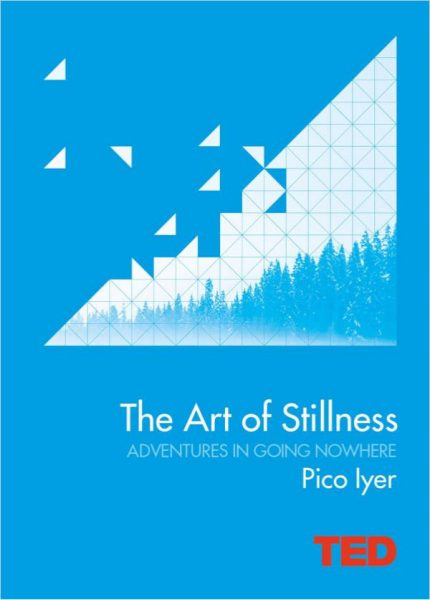 The Art of Stillness: Adventures in Going Nowhere by Pico Iyer
With enormous grace, heart and insight Pico Iyer suggests being still and going Nowhere can be an exhilarating journey where we can deeply connect with our inner selves, and reap rich rewards.
I found this book a welcomed reminder of the need for stillness so we can engage in everyday life centred, strong, present and aware. Pico Iyer says that ‘the point of gathering stillness is not to enrich the sanctuary or mountaintop but to bring that calm into the motion, the commotion of the world.’
Being still and going nowhere helps us to find peace and be fully present wherever we are; in busy settings, in our work with children and colleagues, and in our interactions with friends, neighbours and strangers. It helps us live our lives with intercultural understanding as we engage with others who are different than we are and respect their differences, seek understanding and look for commonalities.
He reflects:
‘In an age of speed, I began to think, nothing could be more invigorating than going slow. In an age of distraction, nothing can feel more luxuriant than paying attention. And in an age of constant movement, nothing is more urgent than sitting still.’
He suggests we can travel to interesting places and have a lovely time. ‘But if you want to come back feeling new–alive and full of fresh hope and in love with the world—I think the place to visit may be Nowhere.’
Pico Iyer’s TED Talk, The Art of Stillness, is a welcomed companion to his book!
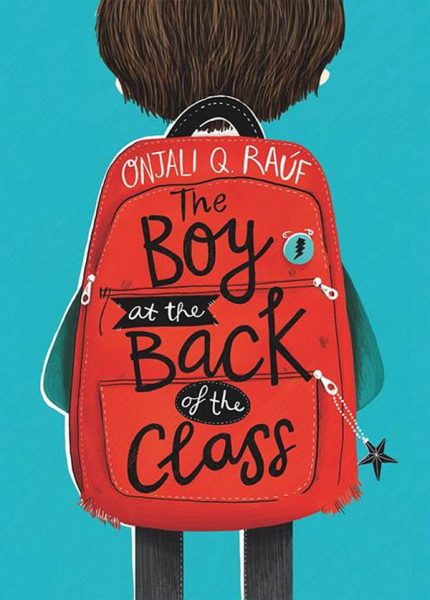 The Boy at the Back of the Class by Onjali Q Raúf
The Boy at the Back of the Class tells the story a new refugee boy who joins the class, and the children who befriend him, and are moved to help him and his family. Written with tremendous humanity Onjali Q Raúf has developed memorable characters. It is impossible to resist coming to love Alexa, the narrator of the story, and her enormous empathy, and acute observations about life and human behaviour. She embodies so much of what it looks like to live one’s life with intercultural understanding.
It would be an excellent read aloud or novel for a book group for upper primary children to help develop empathy, and understand the plight of refugee children and their families. It shows us how the willingness to speak out and use our voice can help raise awareness and have a positive impact. It moves us to consider what we can do to help refugees in our communities and world.
In addition to the refugee crisis, there are many relevant and meaningful topics to explore such as bullying (including adult bullies), stereotypes, racism, fear, friendship, kindness, courage and perseverance.
This book was the:
Overall Winner of the 2019 UK Waterstones Children’s Book Prize
Winner of the 2019 UK Blue Peter Book Award and
A CLIP Carnegie Medal Children’s Book Award Nominee, and rightly so!
Events
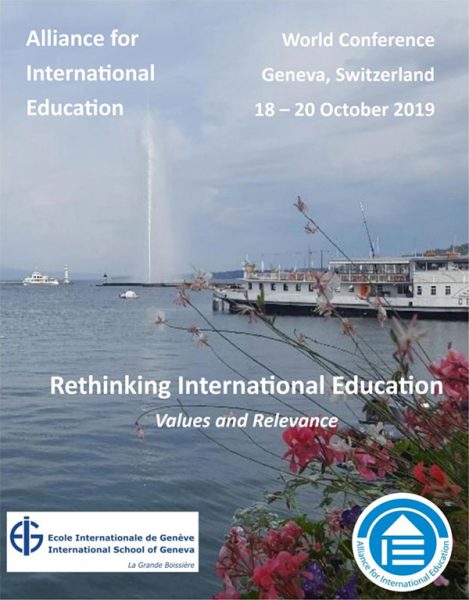 Alliance for International Education World Conference
Rethinking International Education: Values and Relevance
18-20 October 2019
Geneva, Switzerland
International education has traditionally been delivered in international schools worldwide, as well as in national schools with an international ethos and curriculum.
International education promotes respect for diversity and understanding between people, and a responsibility for our wider world, and I believe it is not only relevant, but also fundamental for all schools.
This conference promises to inspire our thinking, and stimulate discussion of the values and relevance of international education at a critical time of challenge and change in our world.
 November Institute
Vital professional development for educating children in today’s world!
Autumn Institute: Teaching and Learning for Intercultural Understanding
8-9 November 2019 International School of Stuttgart e.V.
Come learn with us in Stuttgart! In a world that is increasingly multicultural, multilingual and multiracial, intercultural understanding is a vital disposition and competence to develop in ourselves, in each other and in the children we teach.
JOIN US at the International School of Stuttgart e.V. to further develop ways to integrate teaching and learning for intercultural understanding into your existing curriculum and the life of your school. We look forward to joining together to move this important work forward!
COMMENTS

REGISTER FOR FREE FOR MY RESOURCES, BLOG AND NEWSLETTER
BLOG

Teaching and Learning for Love and Compassion
Newsletter Issue 8 September 2022
Teaching and Learning for Love and Compassion enhances our wellbeing and supports our Diversity, Equity, Inclusion and Justice (DEIJ) work in our learning communities. Learn more about this compelling and essential practice.

Reimagining Education
Newsletter 2021 Issue 7
We are reimagining education where relationships are centered and children and adults work together to create inclusive and equitable learning communities.


Reimagining Our World
Newsletter 2021 Issue 6
We are reimagining our world where human relationships, connection and community are valued and nurtured, and our part in creating it.

Solstice 2020: A time of stillness and reflection
The solstice has given us a pause to reflect on the year gone by. This particular year of Covid-19 we have rediscovered the importance of human relationships, which are at the heart of equity, diversity and inclusion.


The Yearning We Are Feeling Is For Love
Covid-19 has given us pause to consider what is most important in life and we have rediscovered our human need for connection and community, love and compassion, and belonging.

Sharing Caring and Gratitude Round the World
Bermuda’s ‘shelter in place’ restrictions were not far behind the lockdown in Italy. During a conversation back in March with my friend and colleague, Sharon Brown, Design teacher at Somersfield Academy in Bermuda, the idea for a graphic design project entitled Expression of Thanks and Hope was inspired and conceived.

Messages of Gratitude and Hope
As I listened to the many conversations during the The Inquiry Educators Summit (TIES) online 16-17 May 2020 the word collaboration was mentioned often.

Serendipity Wasn’t On My Shopping List
Every now and then we experience a bit of magic in life! It can happen anytime and anywhere, even during a global pandemic at a metre’s distance in front of a shopping trolley during lockdown.

Caring, Compassion and Covid-19
As we face this global health crisis people around the world are joining together to support one another with caring and compassion.

Intercultural Understanding: Compelling pedagogy for meeting the 2030 SDGs
Newsletter 2020 Issue 4

THE POWER OF RITUAL
Click, click, click, the flame bursts to life, the kettle is on, my favourite mug on which is written ‘Non basta una vita. One life is not enough’ sits waiting to receive its English Breakfast teabag.

OUR INSTITUTE AT THE INTERNATIONAL SCHOOL OF STUTTGART e.V.
Intercultural understanding is the bridge between diversity and inclusion, and is critical as we strive to create inclusive school communities.


Making Intercultural Learning and Understanding Visible
Opportunities for intercultural learning and understanding are all around us!

Book Review – Teaching and Learning for Intercultural Understanding: Engaging Young Hearts and Minds
Book Review by Gustavo M Lanata

Five things you need to know about intercultural understanding
It is an exciting time to be an educator.

Celebrating Our Diversity: Sharing Our Identities and Telling Our Stories
Newsletter 2019 Issue 2

A New Year… and a new look at developing intercultural understanding
Newsletter 2019 Issue 1

Celebrations and Traditions: Connecting with Others and Creating Community
What a splendid time of year!